
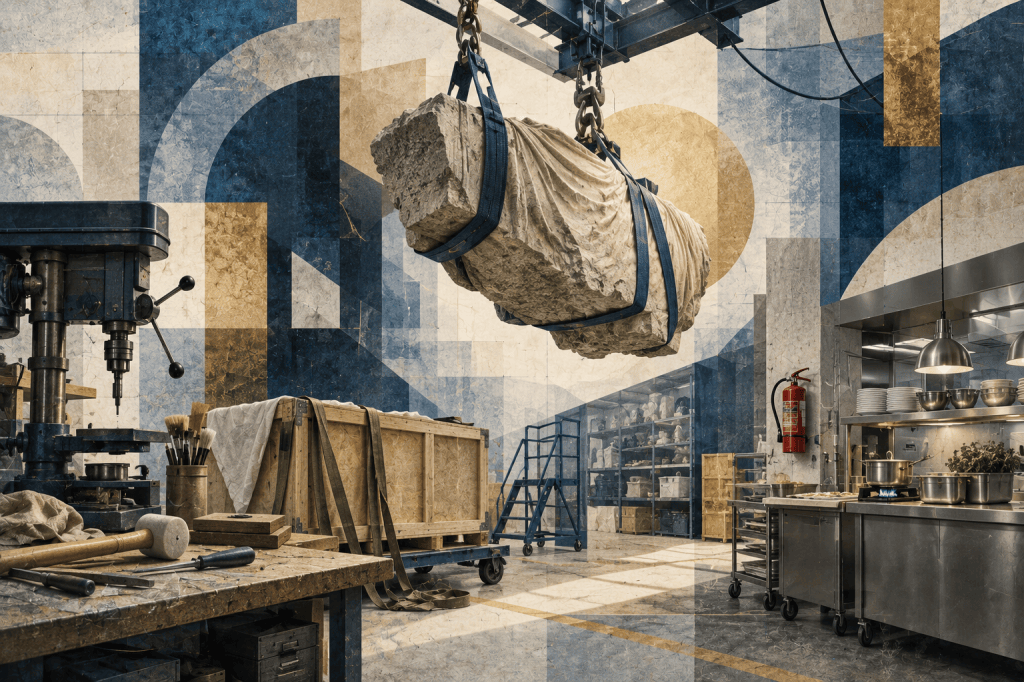
A large object is ready to be lifted into place. The rigging is attached, the crew is waiting, and the installation is on schedule. Then someone asks whether the overhead structure can support the load. The object may have hung there before, but no one can produce a weight limit or an assessment of the structure. The crew must decide whether to proceed with what they think they know or stop until they have an answer.
Decisions like this take place behind the orderly galleries visitors see. Museums receive unfamiliar objects, operate machinery, move heavy collections, maintain buildings, and prepare spaces for the public. The hazards are not always obvious, even to experienced people. What matters is whether the museum has helped its staff and volunteers recognize those risks and given them clear guidance before a decision becomes urgent.
An Illness, Injury, and Accident Prevention Manual, often called a Safety Manual, establishes the museum’s safety policy, defines the responsibilities of leadership, staff, and volunteers, and provides practical guidance for working safely. It helps people recognize hazards and understand how to respond when conditions are uncertain. Someone operating a machine needs more than an instruction to “use caution.” They need to know what can go wrong, which guards must be in place, what protective equipment is required, and when the machine should be taken out of service. Someone handling collections needs to understand which materials may be hazardous and when an object requires assessment before work continues.
The same need for practical guidance extends throughout the museum. Visitor services staff may be the first to notice a loose barrier or a visitor who has fallen. Facilities staff may encounter electrical hazards, unstable shelving, water damage, or unfamiliar materials inside an older building. Event staff see how temporary lighting, cords, tables, and crowds change the use of a gallery. A docent may need to respond to a medical emergency or help visitors leave the building.
No single person knows every department’s work well enough to describe all of these risks accurately. The people with expertise in each area should contribute the information that applies to their spaces, equipment, and tasks. Collections, restoration, exhibits, facilities, security, visitor services, events, and volunteer management each see conditions that others may miss. When a risk requires knowledge the museum does not have, it should seek qualified outside advice.
Departmental knowledge also needs to reach people whose work takes them into another area. A curator may enter a fabrication shop to inspect an exhibit component. A facilities employee may be asked to open collection storage. A volunteer may help with an installation alongside contractors and collections staff. Each may be capable in their own role yet unfamiliar with the conditions where this task will take place.
For that reason, the manual should make clear who is responsible for an area and what someone needs to know before working there. A request to complete a job does not prepare an employee to operate unfamiliar equipment or assess an unidentified material. The people responsible for the space need to explain its hazards, determine what training or supervision is required, and set limits where necessary.
Donations and collection pickups show how quickly an ordinary assignment can change. Screening may reveal that an object needs special handling or should not be accepted. But staff may also discover a damaged battery, a leaking container, or a suspect instrument after they arrive. At that point, they need guidance they can act on: how to avoid unnecessary exposure, keep others away, and obtain an assessment before proceeding.
What staff learn about a hazard must remain available after the immediate decision is made. A warning about a collection object should be connected to its record and communicated to people who may encounter it later. Damaged equipment should be marked or removed from use. A verbal warning known only to the person currently on duty will not protect the next person assigned to the task.
In workshops, the need for clear instructions is especially visible. Restoration and exhibit fabrication may involve cutting, grinding, welding, painting, drilling, lifting, and the use of fuels or solvents. The precautions vary with the work. Eye protection suitable for one activity may do nothing to address the fumes, noise, or moving parts involved in another. The manual should explain the risks of each activity, who is prepared to perform it, and how equipment is inspected and used safely.
Moving a large object presents a different set of questions. Staff need to know its weight and center of gravity, whether the lifting equipment can carry it, and whether the route is clear. They need to consider nearby people and what could happen if the object shifts. When the capacity of an overhead support is unknown, the answer cannot come from the fact that something has hung there before. The work may require an engineering assessment or other qualified review.
The move may continue onto a cart, forklift, truck, or trailer. Each has limits, and several people may take responsibility for the object along the way. Those packing, driving, and receiving it need to understand how it will be secured, transported, and unloaded. Written guidance helps everyone involved understand their responsibilities and coordinate each stage of the move.
Volunteers need the same practical information as employees doing comparable work. Museums benefit from volunteers with a remarkable range of skills, but people arrive with different experience and assumptions. A former machinist may know a great deal about equipment while remaining unfamiliar with a particular machine or the museum’s procedures. A new volunteer may not know which questions to ask. The museum should respect prior experience while making sure each person is prepared for the work assigned to them.
Training turns the manual into something people can use. A general orientation cannot prepare everyone to operate shop equipment, handle suspected hazardous objects, or work at an unfamiliar offsite facility. Instruction should take place before hazardous work begins and be revisited when assignments, equipment, procedures, or known risks change. Where a task requires demonstrated competence, attending a presentation or signing a form is not enough.
Staff and leadership changes create another risk: people inherit rules without knowing why they exist. A new manager may see a restriction as an outdated preference when it reflects a hazard someone has already assessed. Training should pass along that knowledge, including the reasons for important limits and who has authority to make safety decisions.
Regular checks help the museum see whether its guidance still matches conditions. Daily walkthroughs can catch immediate problems such as blocked exits, spills, or damaged equipment. An annual review can look across work areas for recurring concerns, changes in activities, and training that needs to be updated. Findings should lead to a correction or a clear decision about how the risk will be managed.
Even with good preparation and regular checks, conditions can change during a task. People need to know when they can pause the work and whom to contact. If the situation differs from what they were trained or prepared to handle, stopping to reassess is part of doing the job responsibly.
That expectation must hold when stopping is inconvenient. If someone who raises a concern is treated as difficult, others will learn to keep quiet. If an experienced person or senior leader routinely bypasses a restriction, the rule becomes harder for anyone else to follow. A manual has authority only when the museum supports the people using it and brings the right expertise into decisions.
The Safety Manual also connects everyday prevention to emergency response. Its guidance on safe storage, equipment use, inspections, and training helps reduce the chance of a workshop fire. If a fire occurs, the emergency plan tells people how to report it, leave the area, assist others, and account for those who were present. If an unknown material escapes its container in collection storage, immediate instructions should direct people away from the area rather than leave them guessing whether to attempt a cleanup.
Incidents and near misses can reveal where that guidance needs to improve. A dropped object that strikes no one, a machine that nearly catches a sleeve, or a visitor who stumbles without falling may be easy to dismiss. Each may also expose a condition that could cause harm next time. The museum should examine what happened, whether its instructions were clear, whether people had the right equipment and training, and what needs to change.
A museum’s hazards are not always visible, and no employee or volunteer can be expected to recognize every risk from experience alone. A useful Safety Manual brings that knowledge into the open. Training and regular checks keep it relevant as the museum changes. Above all, people need the information and support to make safe decisions in the course of their work.


Leave a Reply