
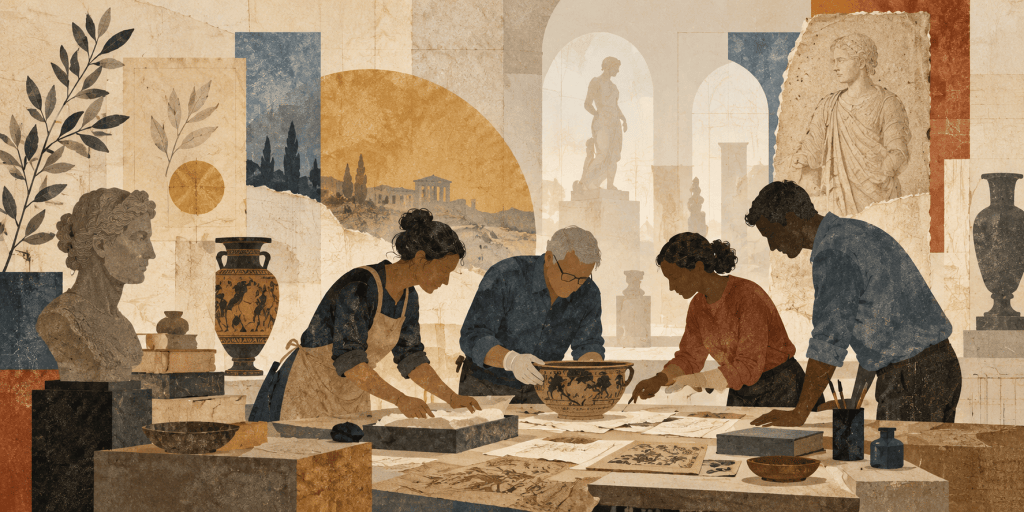
Volunteers can make an extraordinary contribution to a museum, but a strong program takes more than a willingness to accept help. It needs to be formalized and documented: departments should identify the work they need done, while written guidelines and policies give the institution a basis for deciding whom it can support, how volunteers will work with staff, and what success looks like. That structure helps the museum make thoughtful decisions and gives volunteers a meaningful place in its work. In a small organization, volunteers may carry out much of the daily operation, while in a larger institution they often work alongside paid staff. The balance differs, but both need clear responsibilities, support, and accountability.
For more than twenty years, I have worked with volunteers in museums and archives, both as a staff member managing their work and in several volunteer roles myself. As a manager, I have seen volunteers clear backlogs, bring knowledge a department lacked, and help projects move forward through changes in staffing and leadership. I have also seen the staff time required to make those contributions possible. As a volunteer, I learned the value of knowing how my assignment fit the larger project and whom to ask when I was unsure. Experience on either side cannot replace a clear introduction to the museum’s way of working.
Consider a volunteer who knows aviation history and is asked to describe a group of photographs. That knowledge is valuable, but the museum must also explain how it identifies an image, records uncertainty, and links the description to an accession file. Otherwise, weeks of careful work may produce entries that staff have to revisit. The expertise was real; the assignment needed a framework.
The framework starts with the work a department needs done, before an applicant is accepted. Screening can then connect a person’s interests, skills, and availability to a suitable assignment. A visitor who loves conversation might become an excellent gallery guide and find solitary database work frustrating. A retired mechanic could bring rare knowledge to a restoration team but still need instruction in museum documentation. In either case, staff should have a defined project, appropriate workspace and equipment, and a person ready to assign tasks and review the results. The goal is a useful match, grounded in a real assignment.
Time is part of that decision. A short-term volunteer may be ideal for an event or a contained project, while specialized collections work can require weeks of training before a person can work with confidence. The likely length of service should justify the preparation required, and the department must have time to oversee the assignment. Free does not mean everyone should be accepted. A waiting list, a later start, or a different assignment may be more respectful than offering a role that leaves the volunteer without direction and the employee with work they cannot review.
When the match is right, formal onboarding gives the volunteer and assigned staff member a shared starting point. They can discuss the purpose of the project, the schedule, who makes decisions, where work is recorded, and what to do when something unexpected appears. They should also review the museum policies relevant to the role. Volunteers doing comparable work follow the same standards as staff for safety, respectful conduct, confidentiality, collection handling, security, and conflicts of interest. A signature can record that a policy was received, but conversation and training show how to apply it. As the assignment develops, the volunteer needs feedback rather than being left with only the instructions from the first day.
Providing that guidance takes staff time. Employees prepare tasks, answer questions, check results, and adjust assignments as projects change; a volunteer manager may coordinate the work across several departments. If leadership counts only donated hours, it overlooks the employee effort that makes those hours useful. Staff need room in their schedules to supervise and build working relationships. Without that capacity, adding volunteers may slow the work and frustrate the people who came to help.
When staff and volunteers have time to work together, expertise can move in both directions. A volunteer may recognize a restoration component that staff cannot identify or bring research that challenges an interpretation. A good manager listens, examines the evidence, and uses it when it improves the work. The manager weighs that expertise alongside the museum’s records, policies, and responsibilities, then makes decisions within their authority or brings them to the appropriate staff member. Staff should not shut down knowledge because it comes from a volunteer, and volunteers should not treat specialized knowledge or years of service as authority to direct employees or bypass supervision. Explaining a decision, especially when a recommendation is not followed, helps preserve respect on both sides.
That clarity extends to the purpose of service. People may volunteer because they believe in the mission, want to learn, or hope to gain experience through meaningful work. Those are good reasons to participate. If someone’s main aim is privileged access to collections, first claim to an object, influence over a donor, or another private advantage, the placement is no longer centered on serving the museum. A volunteer’s personal collecting or research interests may overlap with an assignment and still bring valuable expertise; the overlap should be disclosed and addressed before it affects a decision. Setting that expectation early is fairer than trying to resolve it after an opportunity arises.
Clear expectations also make it easier to respond when a placement is not working. More guidance, a conversation, or a different assignment may solve the problem. If the work still does not meet the need, or a volunteer repeatedly disregards staff direction or museum policies, the institution should be willing to end the service respectfully and document why. Donated time does not give someone permission to do whatever they choose, and keeping an unsuitable arrangement in place does not benefit staff or volunteers.
The museum should be able to see what volunteer work has made possible. Research notes, catalog entries, restoration histories, photographs, and project decisions belong in institutional records so that the contribution lasts beyond one person’s service. Hours should be tracked for scheduling and reporting, but a total alone cannot show whether a project advanced, a collection became usable, or staff had the capacity to support the work. Looking at those outcomes gives the museum something more meaningful to share with volunteers as well.
Regular communication helps volunteers feel part of the institution. People who serve a few hours a week may miss the news that employees hear during daily work, yet visitors ask them about exhibitions, programs, and changes across the institution. Meetings, emails, announcements, and newsletters help them stay informed and communicate accurately with visitors, prospective volunteers, community members, and potential donors. That wider view allows them to represent the museum confidently beyond their own assignment.
Appreciation should be just as deliberate as communication. A volunteer spotlight in a newsletter or social media post can show the community who helped make a project possible. An awards luncheon or dinner can celebrate years of service. A sincere thank-you from a manager can matter just as much during an ordinary week. Recognition should reach the quiet work in archives, storage rooms, and workshops as well as the public-facing roles. If a team spent months describing archival photographs, the museum could show them the records now available to researchers and tell them how the collection has been used. The most meaningful thanks connects a person’s effort to what the institution and its visitors can now do. Purposeful work, experience, and genuine appreciation are part of what volunteers receive for their service. Feeling valued encourages them to stay and speak about the museum with pride.
Museums often ask how they can do more with limited resources. Volunteers bring time, knowledge, and commitment to work the museum could not always accomplish alone. Staff turn that willingness into lasting results by training people, guiding projects, and remaining accountable for institutional decisions. The museum must make room for both contributions. When it does, volunteers can see the value of their service, employees can support it well, and the institution is stronger for the partnership.


Leave a comment