
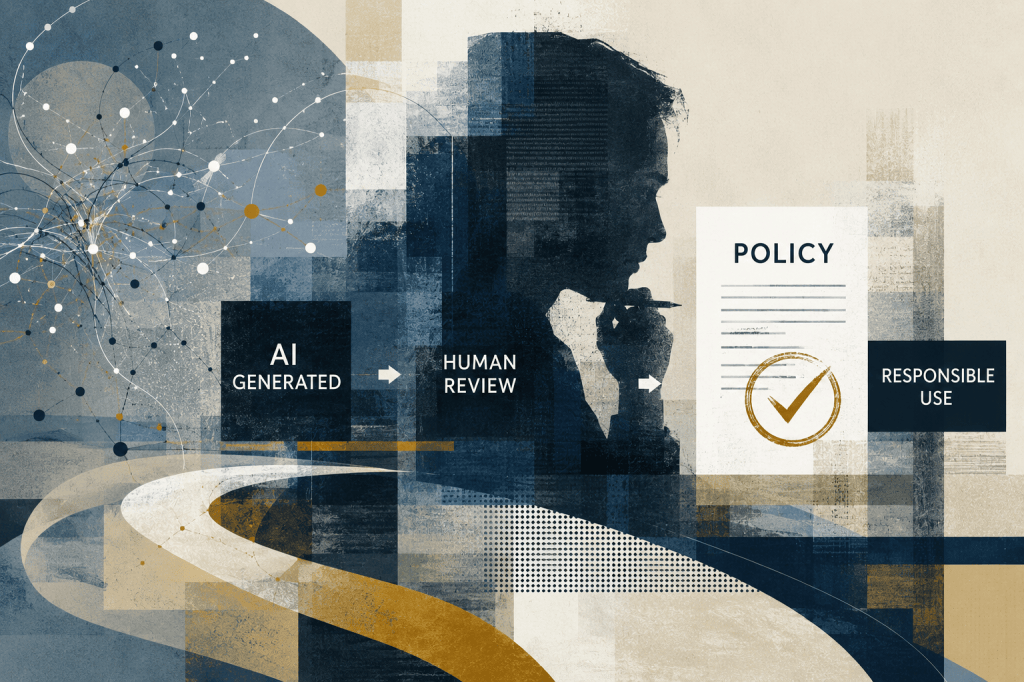
AI Governance
Turn responsible AI use into institutional practice
Most organizations did not introduce artificial intelligence through a formal institutional decision. Staff began experimenting with available tools, often for useful reasons, while policy, training, records practices, and oversight lagged behind.
That creates a governance problem rather than simply a technology problem. Responsible AI use requires clarity about when human review is required, what information should not be entered into external systems, how generated material is verified, what records should be retained, and who is accountable for public-facing work.
A Practical Governance Approach
The goal is not to prohibit useful technology or produce a policy so restrictive that staff ignore it. Effective governance establishes understandable boundaries, identifies higher-risk uses, preserves human judgment, and creates a review structure that can evolve as the technology changes.
What the Engagement Does
Examines how AI is actually being used, the risks and responsibilities created by those uses, and the governance, policy, training, and review structures needed.
Areas of Review
Human review and verification; accuracy; confidential and sensitive information; copyright and attribution; records retention; generated images and public-facing content; leadership oversight; staff training; periodic review.
Potential Deliverables
AI Governance Assessment; Institutional AI Use Policy; Staff AI Guidance; AI Review Checklist; leadership recommendations; training session; annual review framework.
Best Fit
Organizations where staff are already using AI but common standards, accountability, or documentation have not caught up.
Related services: Institutional Readiness · Institutional Continuity · Accreditation & Planning

